First of all, software compatibility is one of the common problems in slicing process. Sometimes the model file format downloaded by users is not supported by slicing software, or there are topological errors in the model itself, such as patches are not closed, overlapping surfaces, etc., which will lead to slicing failure. In this regard, it is suggested to use tools such as MeshLab and Netfabb to repair the model to ensure that it is a complete and error-free closed body. At the same time, select slicing software with strong compatibility, such as Cura, PrusaSlicer, Simplify3D, etc., and update the software version in time to improve the support ability for various model formats.
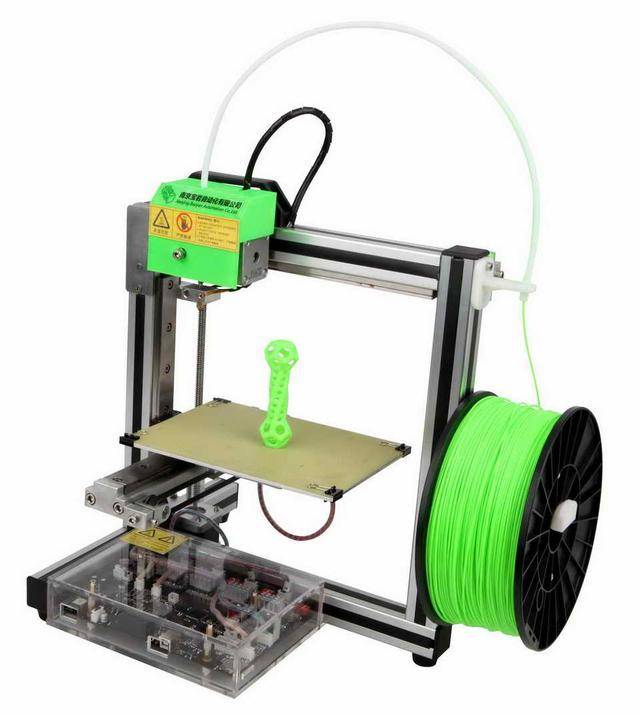
Secondly, improper parameter setting is also an important factor affecting the slicing effect. For example, the height setting is too high, which will lead to the rough surface of the model; Setting the filling rate too low will affect the strength of the model; Improper setting of nozzle temperature and platform temperature may cause printing failure. In order to solve these problems, it is suggested that users choose the appropriate printing temperature according to the materials used (such as PLA, ABS, PETG, etc.), and refer to the default parameters recommended by manufacturers as a starting point, and then make fine adjustments according to the actual printing effect. For example, if it is found that the interlayer bonding is not firm, the temperature of the hot bed can be appropriately increased or the cooling intensity of the fan can be adjusted.
Thirdly, the generation of supporting structure is unreasonable, which is also a common slicing problem. When the model has a suspended structure, if there is no proper support, the printed piece may collapse or deform. At this time, the density and spacing of the supporting structure should be reasonably set, and the functions such as "contact surface support" should be turned on or not. After printing, it should also be convenient to remove the supporting structure to avoid damaging the model body.
Finally, the wrong configuration of machine parameters will also lead to poor slicing effect. Different 3D printers have different restrictions such as nozzle diameter and platform size. If the printer model is not matched correctly when slicing, it is easy to have problems such as model position offset and size error. Therefore, when using slicing software, be sure to select the device configuration that matches the printer, or manually input the accurate printer parameters.
In a word, slicing is an important part in 3D printing. Facing the slicing problem, users should check and adjust the model quality, parameter setting, supporting structure, printer configuration and other aspects. Through continuous practice and optimization, high-quality printing results can be obtained. With the accumulation of experience and the improvement of technology, slicing will no longer be a problem that puzzles 3D printing enthusiasts.

 Hotline:18914229323

 18914229323
 huichangwen@126.com