First of all, material compatibility analysis is the first step to optimize multi-material printing. Different materials have great differences in thermal properties, mechanical properties and chemical properties. For example, the printing temperature of PLA is usually around 200°C, while ABS needs a higher temperature (about 230°C). When multi-material mixed printing is carried out, it is necessary to ensure that the selected materials have good matching in printing temperature, cooling rate and interlayer adhesion. Otherwise, the bonding force between materials is insufficient, which may easily lead to delamination or cracking.
Secondly, the precise control of nozzle temperature and platform temperature is very important. In the process of multi-material printing, it is usually necessary to dynamically adjust the nozzle temperature or adopt a double nozzle system according to the optimal printing temperature of each material. For example, when printing the combination of PLA and TPU, two independent extrusion heads can be used, which are set to their respective optimal temperatures. At the same time, the temperature of the printing platform also needs to be adjusted according to the material characteristics, so as to ensure good bottom adhesion and prevent edge warping or separation.
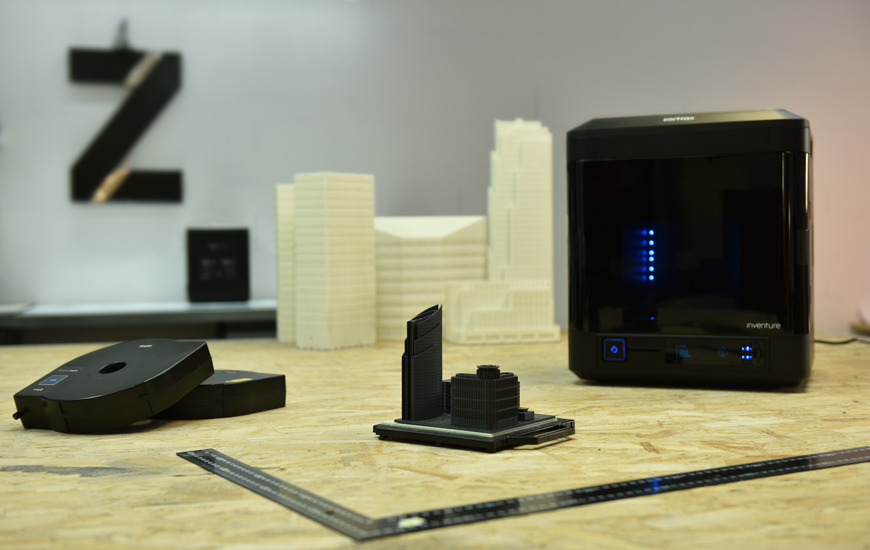
Third, the printing speed and height setting also need to vary with materials. Hard materials such as ABS and PLA can use faster printing speed, while soft materials such as TPU need to slow down the printing speed to avoid wire drawing and deformation. In addition, the choice of storey height will also affect the combination effect between materials. Usually, it is recommended to use a smaller height (such as 0.1mm) when printing multiple materials, so as to improve the interlayer bonding force and surface quality.
Fourthly, the selection of supporting structure and materials should be reasonably designed. The selection of supporting materials is particularly important when printing structures containing suspended structures or multi-material nested structures. For example, PVA or HIPS, as water-soluble or peelable supporting materials, can be easily removed after printing without affecting the structure of the main material. In parameter setting, the adhesion between the supporting material and the main material should be considered to ensure that the supporting material can be firmly attached and easily removed.
Finally, the optimization of post-processing parameters can not be ignored. After forming, multi-material printed parts often need to be post-processed by cooling, cleaning and polishing. Especially when using water-soluble supporting materials, the water temperature and soaking time should be well controlled to improve the removal efficiency and protect the main structure from damage.
To sum up, the success of multi-material printing depends on the comprehensive understanding and fine adjustment of material characteristics, printing parameters and post-processing flow. By setting nozzle temperature, platform temperature, printing speed, layer height and supporting structure reasonably, the quality and stability of multi-material printing can be significantly improved, thus expanding its application potential in industrial design, functional prototype and personalized manufacturing.

 Hotline:18914229323

 18914229323
 huichangwen@126.com