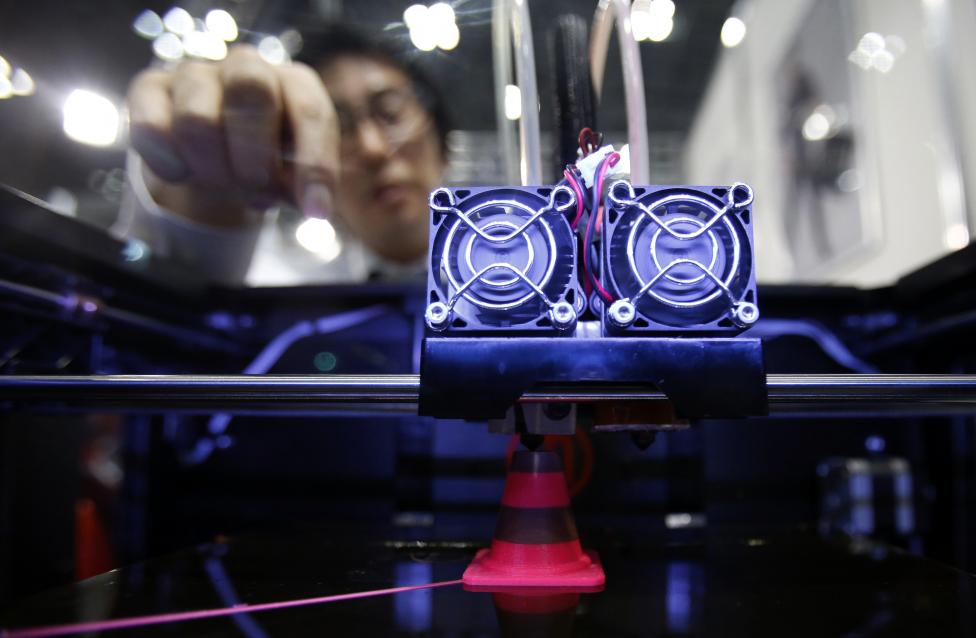
In the process of 3D printing, the diameter accuracy of consumable wire directly affects the printing quality and the normal operation of equipment. Common 3D printing materials such as PLA, ABS, PETG, etc. are usually supplied to the market with a standard diameter of 1.75mm or 2.85mm (sometimes called 3.0mm). However, due to the manufacturing process, transportation or storage, the actual diameter of the wire may be deviated. If these deviations exceed a certain range, it will lead to uneven extrusion, poor interlayer bonding and even nozzle blockage. Therefore, it is an important step to detect the diameter of 3D printing wire regularly to ensure the printing effect.
First, the importance of detecting wire diameter
Accurate control of wire diameter is very important for the extrusion system of 3D printer. The firmware and slicing software of modern 3D printers are calculated based on the standard wire diameter. If the actual diameter of the wire is too large, it will lead to excessive extrusion and form the phenomenon of "squeezing toothpaste"; However, the deviation of wire will lead to insufficient material supply and affect the strength and accuracy of printed parts. In addition, the wire with large diameter fluctuation will aggravate the wear of extruder and shorten the service life of equipment.
Second, the commonly used detection tools
1. Digital calipers
Digital caliper is the most commonly used tool for measuring wire diameter, and its accuracy can reach 0.01 mm. When in use, multiple measurements should be made at different positions of the wire (usually every 10cm) to evaluate its consistency.
2. Micrometer
Micrometer has higher measurement accuracy and is suitable for more detailed analysis of wire. Although the operation is a little cumbersome, its reading is more accurate and reliable.
3. Laser caliper

For professional users or production lines, laser caliper can be used to realize continuous and non-contact high-precision measurement. This equipment can feedback the changing trend of wire diameter in real time.
Third, the detection methods and steps
1. Selection of measuring points: Select multiple measuring points from the wire, and it is recommended to measure every 10 ~ 20 cm to avoid misjudgment caused by local deformation or manufacturing errors.
2. Multi-angle measurement: rotate the wire 90 degrees at the same position for multiple measurements to ensure that its cross section is round and there is no obvious ellipse or flattening.
3. Recording data: Record the measured values every time, calculate the average value, observe the difference between the maximum and minimum values, and judge the stability of the wire diameter.
4. Contrast the standard value: according to the nominal diameter of the wire (for example, 1.75mm), evaluate whether the deviation is within the acceptable range (generally, it is recommended that the error should not exceed ±0.05mm).
Iv. Suggestions on handling abnormal wire diameter
If it is found that the wire diameter deviates from the standard value obviously, the following measures are suggested:
-Change the brand or batch of wire rod and choose products with stable quality;
-Manually adjust the wire diameter parameters in slicing software to compensate the actual deviation;
-Regularly clean the extruder gear and nozzle to prevent printing failure caused by uneven material supply.
tag
To sum up, the detection of 3D printing wire diameter is not only the basic link to ensure printing quality, but also an important means to prolong the service life of equipment and improve printing efficiency. Both ordinary users and industrial applications should pay attention to this link, and carry out regular inspection through scientific methods and tools to ensure the stability and reliability of the 3D printing process.

 Hotline:18914229323

 18914229323
 huichangwen@126.com